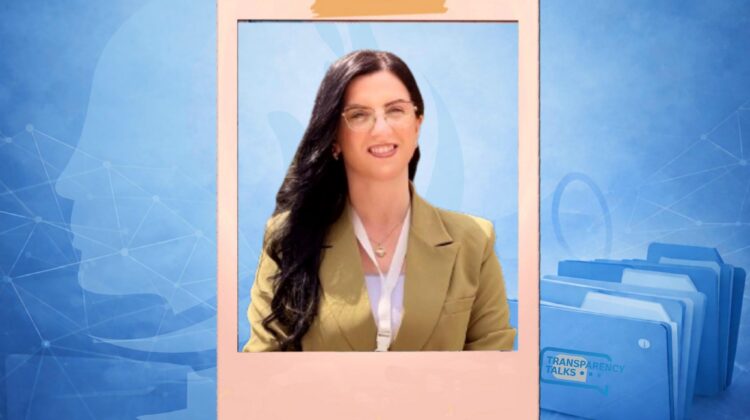

Increasing transparency in public procurement requires profiled journalists

by Agon Sinanaj
Editor/Journalist
Public procurement remains perhaps the least “covered” area by the media in Kosovo. And this is not because, as a field, it is less important than, let say, politics, but rather because it is related to the change in the model of doing journalism after 2011, when the media went online. At the time when there were printed newspapers, each medium had an economic editorial office and profiled journalists who dealt only with public tenders. After 2011, this “tradition” almost no longer exists.
The transition from printed to online media has changed the financing models and the way of working, giving great importance to the speed and quantity of news. This has greatly distorted the quality of journalistic coverage. From profiling, today we have moved to generalization.
I emphasize this because it is very important when talking about transparency in the field of public procurement. Being a specific field that requires specialized knowledge, it is impossible to expose corruption cases in public procurement if the media do not orient journalists towards profiling. In addition to technical knowledge in gathering information, journalists who write about public tenders must be prepared in analyzing data and exposing connections between officials responsible for procurement and companies that win tenders. And this is not an easy job. It requires time and experience in the way the journalist accesses data and sources.
From my experience as a journalist, I think that often the problem is not the lack of information or data. On the contrary, when we talk about public procurement, the data is largely public. However, finding and analyzing them requires knowledge, and this knowledge, especially in public procurement, can only be possessed by profiled journalists. Otherwise, the possibility of errors is very high.
Therefore, the transition to online media, in addition to disadvantages, also has its advantages, which journalists should take advantage of. One of them is what is known as “desk research”. In the Economic Bulletin, the medium where I work, a large part of the work – especially data collection – is based on the online data that we process.
I should mention here the exposure of a major corruption case in 2024, based on “desk research” journalism. We found that the two main companies that built stands for Kosovo at international fairs have the same owner, while the responsible institution presented them to us as competing companies. Through the analysis of data that is online in Croatian institutions, we managed to discover this connection, which is being investigated by the justice authorities after the publication of the research.
Another case is research that we conducted last year in the energy sector. Through online data processing, we found that the company engaged in importing electricity for Kosovo has applied a price up to 220 percent higher than the official price of electricity on international exchanges. Initially, we obtained the price applied by the company, and then compared this data with the price of electricity on the HUPX exchange.
Therefore, when we talk about investigative journalism, today the opportunities to access information are easier, but the emphasis should be on why they are not being used by the media and journalists. The first is what I mentioned above, which is related to the education of journalists and their lack of profiling.
Despite political promises, strategies and budgetary investments, the reality remains problematic: the open data ecosystem in Kosovo continues to be characterized by data fragmentation, the lack of a single point of access, platforms built without interoperability standards and without functional dashboards for users, as well as the almost complete lack of risk indicators integrated into public systems.
This deficiency is particularly noticeable in the field of public procurement. Journalists often need a lot of time and effort to get to the bottom of a tender, precisely because the data is scattered across several institutions.
If a journalist suspects that a tender has been awarded to a company that is a financier of the ruling party, he/she has to go through several websites to get to this information. The same happens when we want to find the connection between public officials and the companies that receive the tenders.
It is precisely in this fragmented terrain that Integrity Watch Kosova, developed by KDI, emerges as an intervention with transformative potential. By bringing together data distributed by three crucial policies in the field of political influence and the fight against corruption, standardizing it and turning it into immediate information through dashboards and risk indicators, the platform not only makes the work of investigative journalists easier, it demonstrates in practice how the state architecture of transparency itself should function. It is concrete proof that intelligent integration of public data is feasible and that waiting for reforms should no longer be an excuse for inaction.
Therefore, especially for investigative journalists in the field of public procurement, platforms like Integrity Watch Kosova represent an important change. Research no longer starts from scratch, but from a structured database. Of course, this does not replace journalistic work, but rather strengthens it. The journalist gains time for analysis and fact-checking in the field.
In this context, open data should not remain a slogan of institutional modernization, but should become a functional infrastructure of public accountability. When data is intelligently integrated, standardized, and visualized, it ceases to be passive archives and becomes an active tool for oversight. This not only empowers investigative journalism and informed citizens, but also sets a new standard for institutions themselves where effective transparency is achievable and should become the norm, not the exception.
This article was developed within the framework of the project “Transparency Talks”, funded by the Kosovo Democratic Institute – as part of the co-financing between the projects “Youth and Civil Society for Integrity”, funded by Sweden (Sida) and “Integrity Monitoring in the Western Balkans and Turkey”, funded by the European Union (EU). The content of this article is the sole responsibility of the recipient and does not necessarily reflect the views of KDI as a sub-grant provider, nor of the donors – Sweden and the EU.